Wednesday, March 11, 2015

My First SaskEd Chat

I enjoyed my first #SaskedChat and it definitely put me in the "Aha" Stage of the "Five Stages of a Twitter User."  I couldn't believe how fast paced it was and was thankful that I was using the Tweetdeck.  Initially I slowed it down but did not like constantly refreshing so I just went full speed ahead.  I managed to keep up after I learned you can click on someone in a row and then you are able to scroll up or down to keep up with the Q & A.

I am a "short and sweet" type personality so the limited use of characters and the directness appeals to me.  I also learned an invaluable lesson again.  That is to learn to take a little information here and there as it passes by.  You do not have to read every single word from every single participant.  This is a hard lesson for me to learn as I am "Old School."  I know as with all  my skills practice and patience will help me learn this new digital citizenship skill.  I know that when I am tired or frustrated I revert back to my old ways of learning/teaching and I need to stop and recognize this within myself.


image source from twitter:  unknown

#ecmp455 #newschool  #twitteraha #saskedchat

Tuesday, March 10, 2015

Bringing the Expertise into the Online Classroom

I just finished up my EdX course "Reconciliation Through Indigenous Education." I am sharing the final assignment which is an initiative to have educators bring in local, community, and Aboriginal expertise and Traditional Knowledge into the classroom.

I am also sharing my proposal for a budget that will  add more of the "human" factor and feel to my online courses.  I believe that it will be a useful model for the new teachers heading out into the Saskatchewan educational landscape.  Often new teachers are reluctant to ask for funding or resources to be optimal educators.  However it is amazing how much the students intrinsically value,  relate and remember unique experiences in and out of the school/classroom. 

 I used to have quite a few community guest speakers, Elders, Role Models and Leaders come into my Native Studies 10, 20 and 30 courses when I taught in Sandy Bay, Saskatchewan.  When local court cases came up with regards to Treaty or Aboriginal Rights I took my students to learn about the protocols and responsibilities of the local justice system.  It gave them a chance to see how local community members and First Nation leaders were responsibly working to protect and instill their Aboriginal Title and Rights within (or at times resistant to)  Provincial restrictions and parameters. 

I hope this proposal letter will give you a starting point to help the next generations of students in Saskatchewan. #ECMP455 #Indigenous Education  #Experiential Learning #Special Project

RE: Proposal for funding to support the integration of Traditional Knowledge Holder's, Gatherer's and Herbalist's expertise into Native Studies 10, 20, 30 Online Course Contexts


Dear Principal and Superintendent:

I have been developing and teaching the Online Native Studies 10/20/30 at various intervals over the past 11 years at edcentre.ca. I am determined to revise all my courses to make them more relevant, meaningful and applicable to my students’ daily lives. At this time I am specifically focused on crafting my Native Studies 30 course to fully engage my online learners. The key is incorporating online activities that embody a more “human” experience. I believe that it is essential to integrate the expertise of the local Traditional Knowledge Holders, Gatherers and Herbalists from our Northern Saskatchewan region in order to significantly enrich this curriculum.

I am requesting your support to enhance our online courses by allocating an “Intergenerational Learning – Elders & Knowledge Keepers” budget for the online Native Studies courses. Other schools in the division are currently enjoying the benefits of Aboriginal perspectives and experiences within their communities. This online initiative would greatly benefit the online school and could also be accessed by a wider range of educators and students.

It would involve online students inquiring about their particular community’s diverse knowledge protocols, Elders, and Knowledge Keepers. This information would be shared in a public forum within my course. This step alone would actuate and reinforce awareness of the invaluableness of Traditional knowledge. Highly and intrinsically motivated students can then make the request to engage in an enriched project based on the protocols. It would involve reciprocity in contributing to the shared knowledge in the community through chronicling in the Oral Tradition, Audio/Visual footage, or demonstrating the skills passed on.

I would like to allocate a maximum of four projects for the 2015/16 school year. Optimistically the projects would be apportioned to Dene, Cree, Michif, and Metis however it would also be dependent on the specific online students involved. This bank of major resources would prove invaluable for Northern Lights School Division educators who would like to initiate requesting the expertise of knowledge holders in their specific community.

As remuneration and protocols will vary from locale and even within locales I am requesting a maximum budget of $500 annually. This would be sufficient for various gifts of appreciation such as tobacco, blankets, Thank-you cards and/or monetary honoraria. This budget would allow for flexibility and could be carried over to the following year.

I look forward to your response and anticipate your support in helping our students deepen their understanding and appreciation for their communities’ knowledge. As they access these proficient educators in their traditional territories it will facilitate a reciprocal process of knowledge sharing as these students will soon be our future community teachers and leaders.

Yours in Online and Indigenous Education,
Kona Guest

Saturday, February 28, 2015

Face to Face Reboot, Reenergize, Reaffirm & "Reconciliation"

I just came back from a two day site visit with my online students in Cumberland House, SK and Creighton, SK.  I have a unique opportunity to teach both adult learners in Adult 12 programs and High School students who are both school age and adult as well.  I found that I easily fell back into my familiar joking around and using Cree language and expressions to help my students feel comfortable and relate more easily to me.  I definitely get a reboot and am able to "recharge" my batteries when I am around people face to face.  This is a special treat for online teachers to go out and connect and engage with their learners in the contexts of their homes, schools and communities.

I am also finishing up my EdX course "Reconciliation through Indigenous Education" through UBC. It has provided me with many resources to help incorporate my Aboriginal students' "Ways of Knowing."  This is becoming a more accepted way to teach all Canadian students at every grade in a way that recognizes the First People across Canada.  It has been said that it will take seven generations of respectful educational experiences to undo the damage of the previous seven generations of Residential School ethnocide.  I believe it, as I actually never heard about residential schools until University although my mom's generation was the last to be a part of this unfortunate legacy.  It also involves all Canadian's education as this is their shared Canadian history.  In moving forward we have to understand the historical contexts that have shaped so many lives and have caused cultural trauma for Aboriginal people that continue to share in a sad state of affairs across Canada today.

I have plans to incorporate and encourage a model of acceptance for the Aboriginal stories and experiences throughout my course.  I will include opportunities for students to share narratives that are tied to the land or their traditional/cultural knowledge (including interviews of their Elders/Grandparents).   I also want to put in a portion about the Residential School and the "Apology" Stephen Harper gave.  I am going to include the use of the Medicine Wheel as a graphic organizer and find ways to intersperse Aboriginal traditions, cultures and perspectives throughout the course.  I find that my Native Studies course presently is based on the Eurocentric and Western Philosophy model of learning and I have the opportunity to use the Aboriginal education model seamlessly in this online course by allowing students the opportunity to be successful in both ways of learning.
#ecmp455 #reconciliation #Indigenous Education #edx #indedu200x #ubcx


Sunday, February 22, 2015

Short & Sweet Models using the "Human Factor"

Recent Understandings of Personalizing my Online Classroom

To date on my major project I have completed the following changes in my revamp of my online courses.  I have incorporated FlipGrid into my forums so that it appears in the introduction of the forum.  The students can either answer the question/share their opinion in the FlipGrid and/or type in their answer in the forum discussion area.  Either would be great in contributing to the class but I of course would prefer that they express themselves in the FlipGrid as it adds to the "Humanness" of the course.

You can pay for the subscription for a year and although it has ten grids these have unlimited "question/answer" areas that have their own unique URL/embed code.  This is extremely handy for me as I can put the same grid in my regular English Language Arts 30 assignment which has many students as my Project Based ELA A30 which is generally a lot smaller.  You can also use it to have students show their projects in other subject areas such as Math & Science.  They may have to have 2-3 scenes if they need to present more than 1 minute 30 seconds.  However that in itself allows them to be concise and articulate in their presentations.

I also learned that although I  usually do not enjoy being in a video recording (such as the big production ones that I develop in Camtasia) I actually enjoyed recording these short and simple Flip Grids.  I feel that my students will also feel more comfortable responding to my example in a short and sweet manner.  Thus the focus will be on the message rather than the media.  I find that am able to relax more and add a bit of humour to my online presence and to online education.  This is something that I definitely have lost since I transitioned from the face to face classroom to the online classroom.  Although I am relaxed enough to practice it the odd time I am face to face with students, on initial phone in assignments and in student feedback it does not come across consistently in my online practise/lesssons. #flipgrid #personalizing online classroom #ECMP455


Humour in the Online Classroom

Humour adds Humanness to the Online Classroom

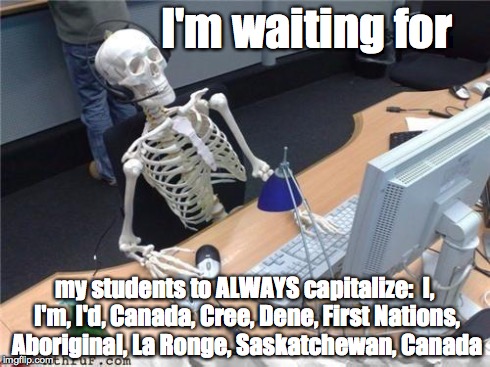
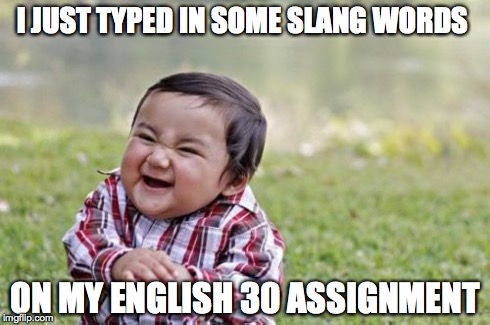
The other understanding that I finally am coming to grips with in trying to add the Human Touch to my online space is using memes in my course.  There is very little humour in my online courses as I have taken this type of learning style in a more serious and formal approach.  I am overly concerned with having a straightforward and direct learning methods/styles so as not to distract my students.  In a way I guess I do this because I am not there to help them synchronously face to face.  The other reason is that it takes a lot of independence and commitment to do online courses and I worry humour would lead to "goofing off" as the online world is overly distracting as it is.

However I think this straight-laced style does not provide "comic relief" for my students.  In my pedagogy I believe that humour adds to a well balanced educational style.  As in my past face to face   classes I practised  "edutaining" my students as it both relaxed them and allowed them to enjoy their learning in a more comfortable and inviting environment.  I truly am working hard to get back to that style and am taking these "baby steps" to get there.  With more positive feedback from my students and by using appropriate methods/tools I am creating the courses that truly reflect my personality and welcome and invite my students to a more "human" online course.

The meme generator that I have used so far is at imgflip.com memes.  I tried to make a meme using my own image however I couldn't seem to get it down pat.  I will be making one soon but for now I am utilizing the stock images provided.  You can uncapitalized the words as well which helps get my point across in the grammar/capitalization memes that I created (see below)  #online classroom humour #memes #human online class #ECMP455 #imgflip.com


Thursday, February 19, 2015

Living & Learning in a Digital World

In response to the presentation in bluejeans.com I was quite surprised that the video came on immediately.  Was anyone else taken off guard?  I was prepared to not turn on my webcam as I had just had a bath and was in my pajamas....lol  I was a classic fail for me personally but no one seemed to notice.

I was also surprised about all the new social media sites that the youth are using today that I wasn't aware of (ex. Tinder, YikYak, Kik Messenger, Tumblr, Whisper, etc.)  I thought I was in the know with Snapchat and Instagram.  However the other online students were quite aware as they were quite recently in face to face schools experiencing requests from their students.  I have the odd Facebook request from my online students who are for the most part adults.  However unless I am ready and willing to have a coffee with them outside of work I do not add them as a friend.

I found this great article/website called Common Sense  "Common Sense is the nation's leading independent non-profit organization dedicated to empowering kids to thrive in a world of media and technology." I enjoyed this site as it has "Parenting, Media, and Everything in Between."  The article is called "15 Sites and Apps Kids are Heading to Beyond Facebook.  I particularly enjoyed it as the headings included "Why its Popular" and "What Parents need to know"  which could easily apply to educators. See an example section below:
8. Kik Messenger is an app-based alternative to standard texting that kids use for social networking. It's free to use but has lots of ads.
Why it's popular
It's fast and has no message limits, character limits, or fees if you just use the basic features, making it decidedly more fun in many ways than SMS texting.
What parents need to know
  • It's too easy to "copy all." Kik's ability to link to other Kik-enabled apps within itself is a way to drive "app adoption" (purchases) from its users for developers. The app also encourages new registrants to invite everyone in their phone's address book to join Kik, since users can only message those who also have the app.
  • There's some stranger danger. An app named OinkText, linked to Kik, allows communication with strangers who share their Kik usernames to find people to chat with. There's also a Kik community blog where users can submit photos of themselves and screenshots of messages (sometimes displaying users' full names) to contests.
  • It uses real names. Teens' usernames identify them on Kik, so they shouldn't use their full real name as their username.

In the classroom it would be great to have an open discussion about these apps and ongoing discourse as to why the app maybe helpful and how they could also be harmful.  In most cases the apps have not been blocked at the school level....yet.  In other cases it may be peer pressure to be in the "in crowd" with that particular app on the user's mobile device.

Perhaps discussions around the ability for an individual to be able to "quit" the app for a day, week, or month could be discussed.  Has anyone ever tried to have this conversation with their students?  Addictions to media are a reality and they should be handled with support and understanding similar to any other addiction.  Teaching "balance" and "rights" and "responsibilities" would go hand in hand with this discussion.  By using "Common Sense Media" you will you be able to know what you are talking about and be a little more unbiased than parents to discuss the pros and cons of the apps.

On a happy note my son cleaned up his Instagram and I am one happy momma.  At first I felt awkward about looking at his Instagram (similar to looking at his diary/journal) without an invitation or permission.  However we must remember as parents/educators that the rest of the world has access to these social media websites at all times, thus we shouldn't feel bad ;-).

Monday, January 26, 2015

 Blogs

 In the past I would usually do a search for information and find a pretty good website.  From the website I would click on the blog and read an article or two then move on.  I have always been encouraged to contribute to our school blog at edcentre.ca and have tried to a couple of posts.  However I often had a hard time coming up with something interesting, fun and genuine that my students could relate to.  I had the dream to blog but I didn't have the emotional "funding" to back it up.  I am glad this course is giving me the opportunity to delve into blogs.  

I looked over the suggested blogs in the weekly course schedule and found some interesting Canadian Blogs and others in the top ten which I added from the Teach 100 - Top Educational Blogs .  I did notice from The 50 Best Blogs for Future Teachers that there were bloggers apologizing for not blogging and also informing their readers that they are taking a hiatus.  I am glad to see these bloggers are "human."

The blog Edgalaxy was interesting and relevant as it kickstarted the creative side of my brain.  With a simple video to "The Google Research Tool" I began to think about the ease of using this tool to model citing sources.  I would like to make simple lessons on plagiarism, citing sources, and paraphrasing.  This would be an excellent start as I like tools to be user-friendly, free and intuitive for my students to apply to their lives.  This blog has interesting posts about Technology and Passion-Based Learning.  The little nuggets of information can help formulate new methods and ideas to incorporate into my course.  The trick and the key to it is to do one little step at a time.

I signed up for Inoreader and subscribed to some interesting blogs about "Technology and Education."  I was pleasantly surprised to find Alec's blog "open thinking."  I had heard some of this information in his presentations at iT Summit and when I looked at the name "alec" I put two and two together.  

I was inspired by reading his post on "Flickr Perversion" to talk to my teenage son about  his Instagram.  I recently found his Instagram by searching for it and felt the gamut of emotions.  50% pride, 25% curiosity, 15% shock and and 15% dismay.  I closely monitored his Facebook in the past as well as his Hotmail.  He was given a couple chances to delete some inappropriate Facebook posts or "facebook" dire consequences.  Since he has moved to his dad's four hours away I notice he no longer Facebooks but is into Instagram.  

I want to address with him
4) What rights and responsibilities do we have as parents to protect the digital identities of our children?
This is helpful and relevant because he is very responsible and I want him to be cognizant of this in his instagram at all times for his "present" and his "future." Update: Talked to my son and he thinks its chuckled at my request to clean up some of his Instagram posts.  He probably thinks of it as "cleaning up his room."  We will see tomorrow when I check it if he "cleaned up his online room." #digital citizenship #blogging